
Rodents & Wildlife
Termites & Timber
Stinging Pests
Crawling Insects
Property Programs
Not sure what you have?Describe what you have seen and we will identify it – no charge, no obligation.
All Services
Rodents & Wildlife
Termites & Timber
Stinging Pests
Crawling Insects
Property Programs
Company
Our WorkPricingProcessAboutContactCall 0435 073 966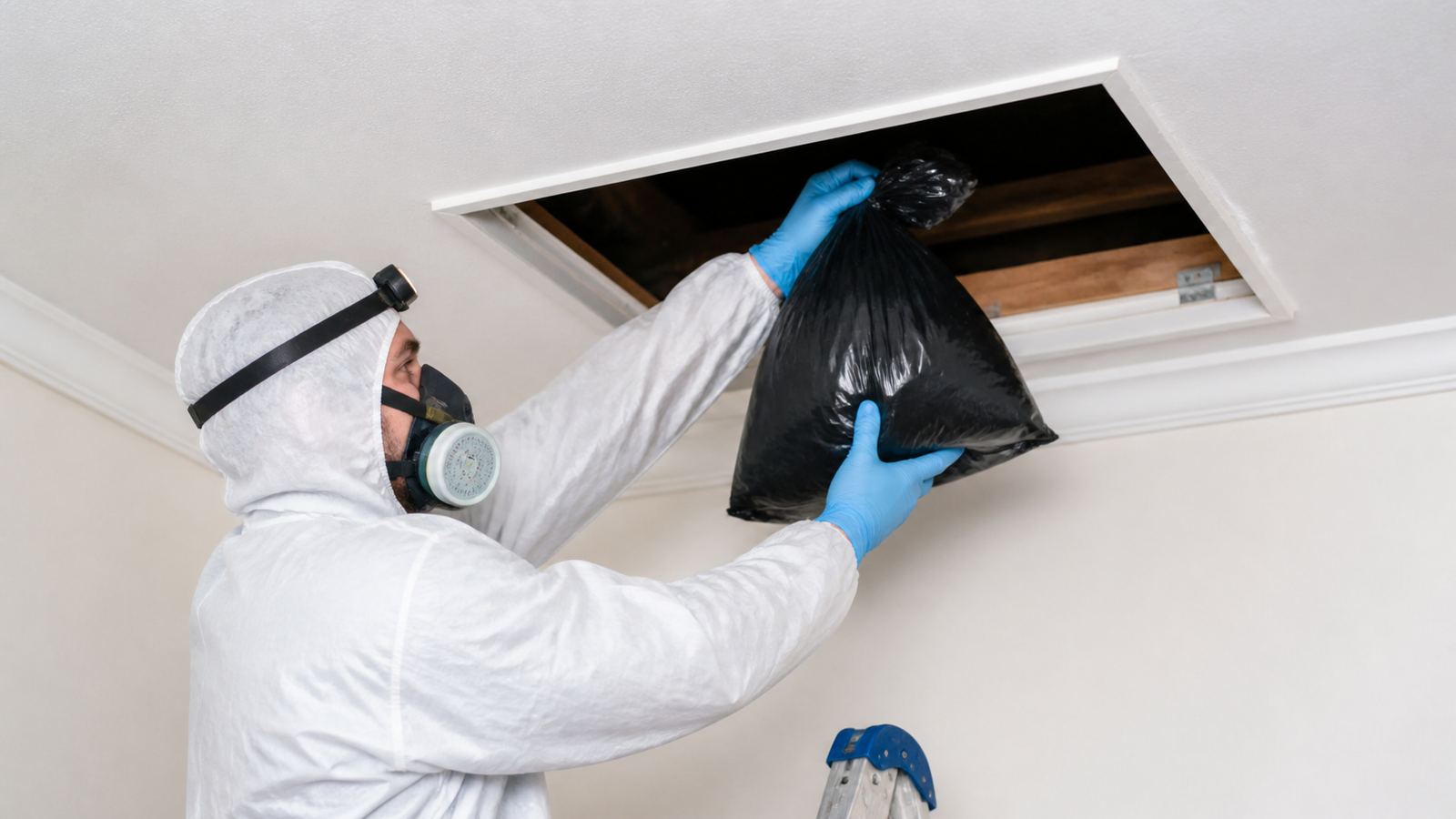
Home/Dead Animal Removal Melbourne
Located, removed, deodorised · Melbourne-wide · 24/7Dead Animal Removal Melbourne|Call 0435 073 966 For Emergency
Smell getting worse every day? We locate and remove dead animals across Melbourne the same day, then sanitise. Call 0435 073 966 for a free quote.
Something has died in the house? Start here
Tell us your postcode and which room the smell is strongest in. A technician calls you back with a clear written quote.
Request your quote
Takes under a minute – postcode and what you have seen is enough.
Your details go to our Melbourne office only.
How long the smell lasts, and why it is usually worth removing
People want a number, so here is a real one. A mouse or rat in a wall takes roughly one to three weeks to pass its worst. A possum in a sealed roof void takes four to six weeks, and in a hot cavity it can run past eight. Melbourne roof voids climb above 50C in summer, which is why a small carcass can become overpowering within 48 hours.
So yes, it will eventually stop on its own. The question is whether you want to live with it for six weeks while the fluid soaks into plaster and insulation – and while blowflies, maggots and carcass mites leave the body and spread into the room. That secondary wave is the part people do not expect.
And the honest bit almost nobody publishes: sometimes the carcass genuinely cannot be reached without cutting plaster or lifting decking. When that happens we will tell you plainly, quote the access work separately, and offer the deodorising option so you can decide – rather than pretending we can pull it out of a sealed cavity for the standard price.
One more thing, because it explains most of these calls: supermarket rodent bait is the usual cause. A poisoned rodent dies where it nests, which is inside your wall. That is a foreseeable outcome of DIY baiting, and it is why our rodent work leans on trapping and proofing.
Rat, Possum Or Bird? It Changes The Search
The species tells us where to look, how long the smell will last and what the job costs.

Rat or mouse
The most common by far
Usually in a wall cavity, under insulation or beneath the floor, and nearly always following DIY baiting. The smell builds for a week, peaks around days 7-10, then slowly fades.
What it means: Smallest job and the fastest to resolve. One to three weeks of odour if left. Access is often possible through the roof void or by lifting a single insulation batt.
Possum
The worst smell of the three
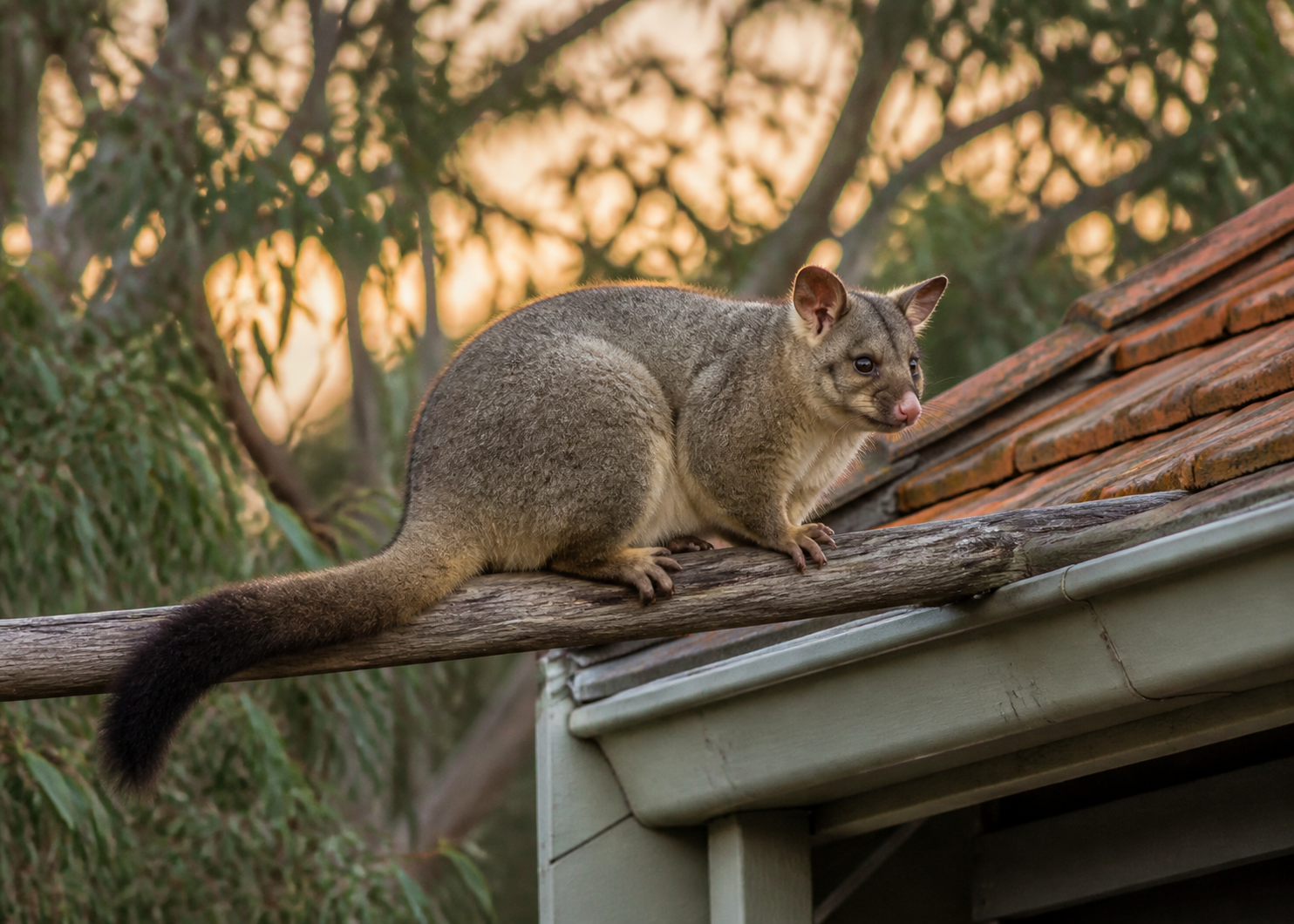
Much larger, so far more fluid and a far longer decomposition. Usually in the roof void, a wall cavity or a chimney, and often an animal that was trapped in and could not get out.
What it means: Four to six weeks of strong odour if left, sometimes longer in a sealed cavity. Worth removing rather than waiting out, and the entry point should be sealed afterwards.

Bird
In a flue, cavity or solar array
Pigeons and starlings die in chimneys, flues, roof voids and under solar panels. Often accompanied by an old nest, which holds mites and keeps producing smell after the bird is gone.
What it means: The nest matters as much as the bird – leaving nesting material behind means the mites and the odour stay. Removal plus proofing is the pairing that works.
Finding It Faster
Six things that narrow down where the carcass actually is.
Flies at one window, in one room only
The strongest single clue. Blowflies gather at the nearest light source to the body, so the room with flies is the room to open up.
The smell is strongest on warm afternoons
Heat accelerates decomposition and drives odour out of the cavity. If it spikes in the afternoon, the carcass is likely in the roof void rather than the subfloor.
A damp patch or stain appearing on the ceiling
Decomposition fluid coming through the plaster. It marks the location precisely, and it means the plaster likely needs replacing as well.
Small maggots on the floor or in the light fitting
Larvae leaving the body to pupate. Unpleasant, but it gives us a direct line to where they dropped from.
It started about a week after you put bait down
Almost certainly a poisoned rodent in a wall cavity. This is the single most common origin story for these calls.
Sweet, heavy smell near the fireplace
A bird down the flue. Common in Melbourne, and usually straightforward to reach from the chimney rather than through a wall.
Four Steps, One Clear Quote
Locate first – opening the wrong wall is the expensive mistake.
Locate it
We work the roof void, subfloor and wall cavities, following odour intensity, fly activity and staining. Locating properly is what avoids cutting plaster in the wrong spot.
Clear written quote
You get the location and the price before anything is opened. If access needs cutting or decking lifted, that is quoted separately and clearly, not sprung on you.
Remove and clean
The carcass and any nesting material come out, and the area is cleaned. Nesting material left behind keeps producing odour and holds mites long after the animal is gone.
Sanitise and deodorise
The area is treated for the flies, maggots and mites that come off a carcass, then deodorised. We also seal the entry point so the next animal does not repeat it.
Dead Animal Removal Cost Melbourne
Published, quoted in writing, and quoted once we know where it is.
Dead rodent removal
Rat or mouse located and removed, area treated and deodorised.
Dead possum or bird
Larger carcass, plus removal of nesting material and full sanitising.
Difficult access
Where plaster, decking or roof sheeting has to be opened to reach it.
Deodorise only
Where the carcass genuinely cannot be reached and the honest option is odour treatment.
What the price covers: locating the carcass, removing it and any nesting material, cleaning and treating the area for flies and mites, and deodorising.
Comparing quotes? Melbourne operators mostly quote on inspection rather than publishing, and most complete the job within an hour of arriving. Ask two questions before you book: does the price include sanitising, and what happens if it cannot be reached. Send us any written quote and we will beat it by 5%.
Located and removed, or told honestly why not
This is the one service where the temptation to overpromise is highest, because you cannot see what we are doing in the cavity.
Three Things Most Dead Animal Companies Will Not Tell You
Your rodent bait caused it
A poisoned rodent dies in its nest inside your wall. It is the predictable outcome of DIY baiting, which is exactly why our rodent quotes lean on trapping and proofing instead.
Sometimes it cannot be reached
Sealed cavities, second-storey walls and under-slab voids are occasionally genuinely inaccessible without significant building work. Anyone who guarantees retrieval sight-unseen is guessing.
The nest is half the problem
Remove a bird and leave the nesting material and you keep the mites and much of the smell. Any quote that does not mention nest removal is quoting half the job.
Often Booked With Dead Animal Removal
Same crew, same visit where it makes sense.
Dead Animal Removal Across Every Melbourne Suburb
One number covers the whole metro area, with no travel surcharge.
Dead Animal Removal Melbourne FAQs
The questions we are asked most, answered straight.
How much does dead animal removal cost in Melbourne?
Ours starts from $149 for a rat or mouse, $249 for a possum or bird including nesting material and full sanitising, and $349 where plaster or decking has to be opened to reach it. Where the carcass genuinely cannot be reached, deodorising alone is from $129.
How long does the smell last if I do nothing?
A rat or mouse is roughly one to three weeks. A possum in a sealed roof void is four to six weeks and can exceed eight in hot weather. Melbourne roof voids get above 50C in summer, which is why even a mouse can become overpowering within 48 hours.
Will the smell go away on its own?
Eventually, yes. The question is whether six weeks of it is acceptable, and whether you want the fluid soaking into insulation and plaster while blowflies, maggots and carcass mites leave the body and spread into the room.
How do you find it?
Odour intensity, fly activity and staining, worked through the roof void, subfloor and wall cavities. Flies at one window in one room is the single most useful clue you can give us on the phone.
What if it cannot be reached?
It happens – sealed cavities, second-storey walls and under-slab voids are sometimes genuinely inaccessible without building work. We will tell you plainly, quote any access work separately, and offer deodorising so you can decide. We will not charge you for a removal that did not happen.
Do you have to cut a hole in my wall?
Usually not. Most carcasses are reachable through the roof void, by lifting insulation, or from the subfloor. Where cutting is genuinely the only option we quote it separately and show you where before anything is opened.
Is a dead animal in the wall a health risk?
The main risks are the secondary ones – blowflies, maggots and carcass mites leaving the body and moving into living areas, plus the bacteria involved. That is why sanitising is part of the job rather than an extra.
Why did this happen after I put down rat bait?
Because poisoned rodents die where they nest, which is inside your walls and roof. It is a foreseeable outcome of baiting, and it is exactly why we use trapping and proofing where a carcass could not be retrieved.
Can you stop it happening again?
Yes, by sealing the entry point. Removal treats today’s problem; proofing is what stops the next animal getting in and dying in the same cavity. We quote both.
Do you service my suburb?
Yes – all of metro Melbourne, from the CBD out through the northern, eastern, southern, bayside and western suburbs, with no travel surcharge.
Get it found and removed today
Send your postcode and which room smells strongest. We will call back with a clear written quote.
Get my free quote
No obligation. Answered 24/7.
Your details go to our Melbourne office only.
Get your free quote
Quoted in writing before we start. Answered 24/7.