
Rodents & Wildlife
Termites & Timber
Stinging Pests
Crawling Insects
Property Programs
Not sure what you have?Describe what you have seen and we will identify it – no charge, no obligation.
All Services
Rodents & Wildlife
Termites & Timber
Stinging Pests
Crawling Insects
Property Programs
Company
Our WorkPricingProcessAboutContactCall 0435 073 966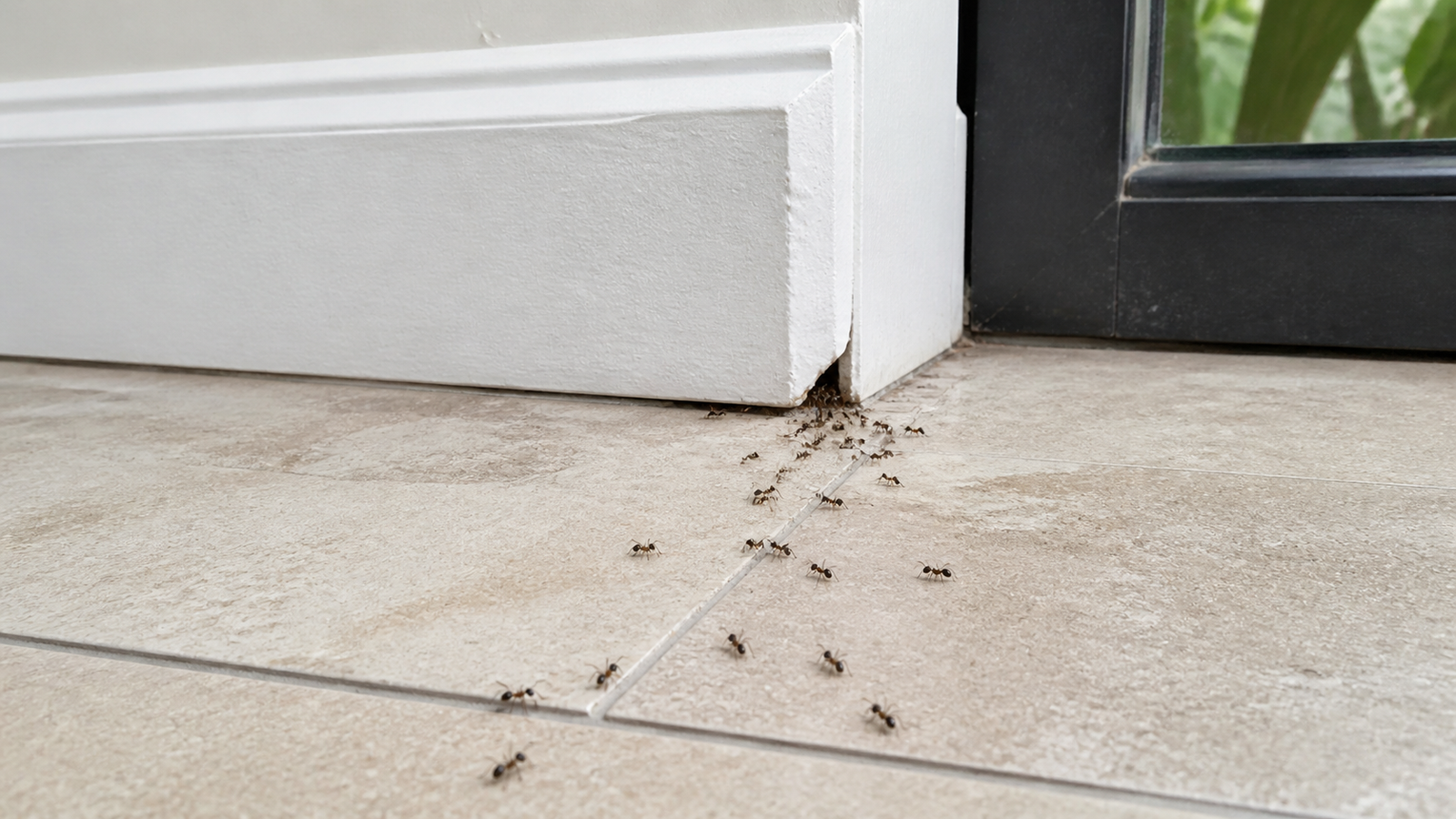
Home/Ant Control Melbourne
Kitchens, lawns & wall cavities · Melbourne-wide · 24/7Ant Control Melbourne|Same Day Ant Treatment
Ant trails through your kitchen? We treat ants across Melbourne the same day, at the nest rather than the trail. Call 0435 073 966 for a free quote.
Ants marching through the kitchen? Start here
Tell us your postcode and where the trail runs. A technician calls you back with a clear written quote.
Request your quote
Takes under a minute – postcode and what you have seen is enough.
Your details go to our Melbourne office only.
Spraying the trail is the one thing guaranteed to fail
The ants you can see are foragers – around five percent of the colony. The queen and the brood are somewhere you cannot see: in a wall cavity, under the slab, beneath the paving or in the garden bed. Killing foragers on a benchtop changes nothing at all about the colony that sent them.
It is often worse than nothing. Several species common in Melbourne, including Argentine ants, respond to a chemical attack by budding – the colony splits and multiple queens set up new nests away from the threat. One trail becomes three, and now you have a harder job than you started with.
The method that works is the opposite of intuitive: let them keep foraging, and give them something to carry home. A non-repellent gel or liquid bait is taken back and shared through the colony by trophallaxis, reaching the queen and the brood you were never going to reach with a spray can.
So if we treat your kitchen and ask you not to wipe the trail away for a day or two, that is why. The trail is the delivery route.
Five Ants, Three Completely Different Problems
Kitchen trails, lawn nests and stinging species all get called an ant problem. They need different treatments.

Argentine ant
Linepithema humile
Small, light to dark brown, in dense unbroken trails that run for tens of metres. Forms supercolonies with many queens that can span several neighbouring properties.
How we treat it: Baiting only. Spraying makes this species bud into multiple nests, which is how one trail becomes three. Often needs the neighbours treated to hold.

Sugar and house ants
Camponotus and Ochetellus species
The classic Melbourne kitchen ants – shiny black house ants around 2.5-3mm, and the larger sugar ants that appear at night. They nest in wall cavities, under paving and in roof voids, and follow sweet and greasy food indoors.
How we treat it: Gel and liquid bait placed on the active trail, plus finding the nest entry. Usually resolves in one to two weeks as the bait moves through.

Ants trailing in from outside
Paving, lawn and garden nests
Trails coming under the door or through a weep hole from a nest in the lawn, paving joints or a garden bed against the house.
How we treat it: Treated at the source outside plus a perimeter barrier. Indoor spraying alone will never resolve a nest that is not indoors.

Green-head ant
Rhytidoponera metallica
Metallic green-purple, around 5-6mm, nesting in lawns, paths and garden beds. Very common across Melbourne and the reason people get stung barefoot on their own grass.
How we treat it: This one stings, and the sting hurts out of proportion to the size. Treated at the nest in the lawn or paving rather than indoors, because that is where it lives.

Bull ant
Myrmecia species
Large – 15-25mm – with big eyes and obvious jaws, and aggressive when the nest is approached. Nests are a bare earth mound with a single entrance, usually in a sunny part of the yard.
How we treat it: A genuine sting risk, and one worth taking seriously if anyone in the household has an allergy. The nest has to be treated directly; there is no bait shortcut with this one.
What The Trail Is Telling Us
Six observations, and what each one points to.
A single steady line to one food source
A pheromone trail from an established nest. It is also the treatment route – which is why we bait it rather than wipe it.
Ants appearing after rain
Flooded nests move indoors. Extremely common in Melbourne after a wet spell and usually a perimeter problem, not a kitchen hygiene one.
Fine soil or sand pushed up between paving joints
Nest excavation. This tells us where the colony actually is, which is the only place treatment matters.
Winged ants indoors on a warm day
A nuptial flight – the colony is mature enough to send out new queens. Worth treating before those queens establish.
Trails running along a skirting or up a wall cavity
A nest inside the structure rather than outside. This one needs bait placed at the entry, not a barrier spray around the house.
Ants on plants, with sticky residue on the leaves
They are farming aphids for honeydew. Treating the aphids reduces the ants far more effectively than treating the ants does.
Four Steps, One Clear Quote
Find the nest, bait the trail, seal the route.
Identify the species and find the nest
The species decides the method – baiting a species that buds under spray pressure is not optional. We follow the trail back to where it is coming from.
Clear written quote
Findings and price before we start, including whether this is an indoor nest, an outdoor nest, or an aphid problem on your roses that is causing the whole thing.
Bait, do not blitz
Non-repellent gel or liquid bait placed on the active trails and at the nest entry, so foragers carry it back and share it through the colony.
Treat the perimeter and seal
An external barrier plus sealing the weep holes, door gaps and pipe penetrations they are using. This is what stops the next colony taking the same route.
Ant Control Cost Melbourne
Published, and quoted in writing.
Ant treatment
Internal baiting on active trails plus an external perimeter barrier.
Nest treatment
Where the nest is located in a wall cavity, under paving or in the lawn and needs direct work.
Argentine ant program
Baiting program for supercolony species, including the follow-up visit.
Commercial premises
Cafes and food premises, scheduled outside trading hours with records.
What the price covers: identification, baiting on the active trails, locating and treating the nest where we can reach it, an external perimeter barrier, and advice on the entry points to seal.
Comparing quotes? Melbourne rates run about $179-199 for a standard ant treatment, with internal-only jobs around $249 and follow-ups near $199. What matters more than the number is whether they are baiting or spraying – a cheap spray on a budding species costs you more later. Send us any written quote and we will beat it by 5%.
Treated at the nest, not at the trail
Ant work either reaches the queen or it does not. Everything on this page is built around getting bait to her rather than killing foragers you can see.
Three Things Most Ant Companies Will Not Tell You
Your spray can made it worse
Argentine ants and several other species bud under chemical pressure – the colony splits and new queens set up elsewhere. One trail becomes three, and the next quote is bigger.
Do not wipe the trail after treatment
The trail is how bait gets to the queen. Cleaning it away the same afternoon is the most common reason an ant treatment underperforms.
Sometimes the problem is aphids
Ants farming aphids on your roses or citrus will keep coming back no matter what we spray. Treat the aphids and the ants lose interest – that advice is free.
Often Booked With Ant Control
Same crew, same visit where it makes sense.
Ant Treatment Across Every Melbourne Suburb
One number covers the whole metro area, with no travel surcharge.
Ant Control Melbourne FAQs
The questions we are asked most, answered straight.
How much does ant control cost in Melbourne?
Ours starts from $149 for internal baiting plus an external perimeter barrier, $199 where the nest needs direct treatment, and $249 for an Argentine ant program including the follow-up. Melbourne rates typically run $179-199, with internal-only treatments around $249.
Why do the ants get worse after I spray them?
Because several species common here, Argentine ants especially, respond to chemical pressure by budding – the colony splits and multiple queens establish new nests away from the threat. You kill the foragers you can see and multiply the nests you cannot. Baiting is the answer for exactly this reason.
Why should I not clean the ant trail after treatment?
The trail is the delivery route. Bait works by foragers carrying it back and sharing it through the colony, so wiping the trail away breaks the chain to the queen. Leave it for a day or two, then clean normally.
How long does ant treatment take to work?
You will usually see a noticeable drop within a few days and it is generally resolved in one to two weeks as the bait moves through the colony. Supercolony species take longer and are the reason the Argentine program includes a follow-up.
Why do ants come inside when it rains?
Their nests flood. It is one of the most common reasons for a sudden Melbourne ant call after a wet spell, and it means the nest is outside – so an indoor-only treatment will not hold once the weather turns again.
Are ants in the kitchen a hygiene problem?
Not usually a cause, though food and moisture certainly help a trail establish. Ants come in because a nest outside or in a wall cavity found a route, not because a kitchen is dirty. Sealing the route matters more than scrubbing.
Can you get rid of ants permanently?
We can clear the colony causing your problem and seal the route it used. New colonies exist in every Melbourne garden, so the honest answer is that a treated and sealed home stays clear far longer, and an annual perimeter treatment keeps it that way.
What are the ants on my roses and citrus?
They are farming aphids or scale for honeydew. This is the case where treating the ants achieves very little – deal with the aphids and the ants lose the reason to be there. We will tell you that rather than sell you repeat visits.
Do you treat ant nests in the lawn or paving?
Yes. Nests under paving joints, in lawn and in garden beds against the house are extremely common and get treated at the source. Indoor treatment alone never resolves a nest that is not indoors.
Do you service my suburb?
Yes – all of metro Melbourne, from the CBD out through the northern, eastern, southern, bayside and western suburbs, with no travel surcharge.
Book ant control before 2pm today
Send your postcode and where the trail runs. We will call back with a clear written quote.
Get my free quote
No obligation. Answered 24/7.
Your details go to our Melbourne office only.
Get your free quote
Quoted in writing before we start. Answered 24/7.