
Rodents & Wildlife
Termites & Timber
Stinging Pests
Crawling Insects
Property Programs
Not sure what you have?Describe what you have seen and we will identify it – no charge, no obligation.
All Services
Rodents & Wildlife
Termites & Timber
Stinging Pests
Crawling Insects
Property Programs
Company
Our WorkPricingProcessAboutContactCall 0435 073 966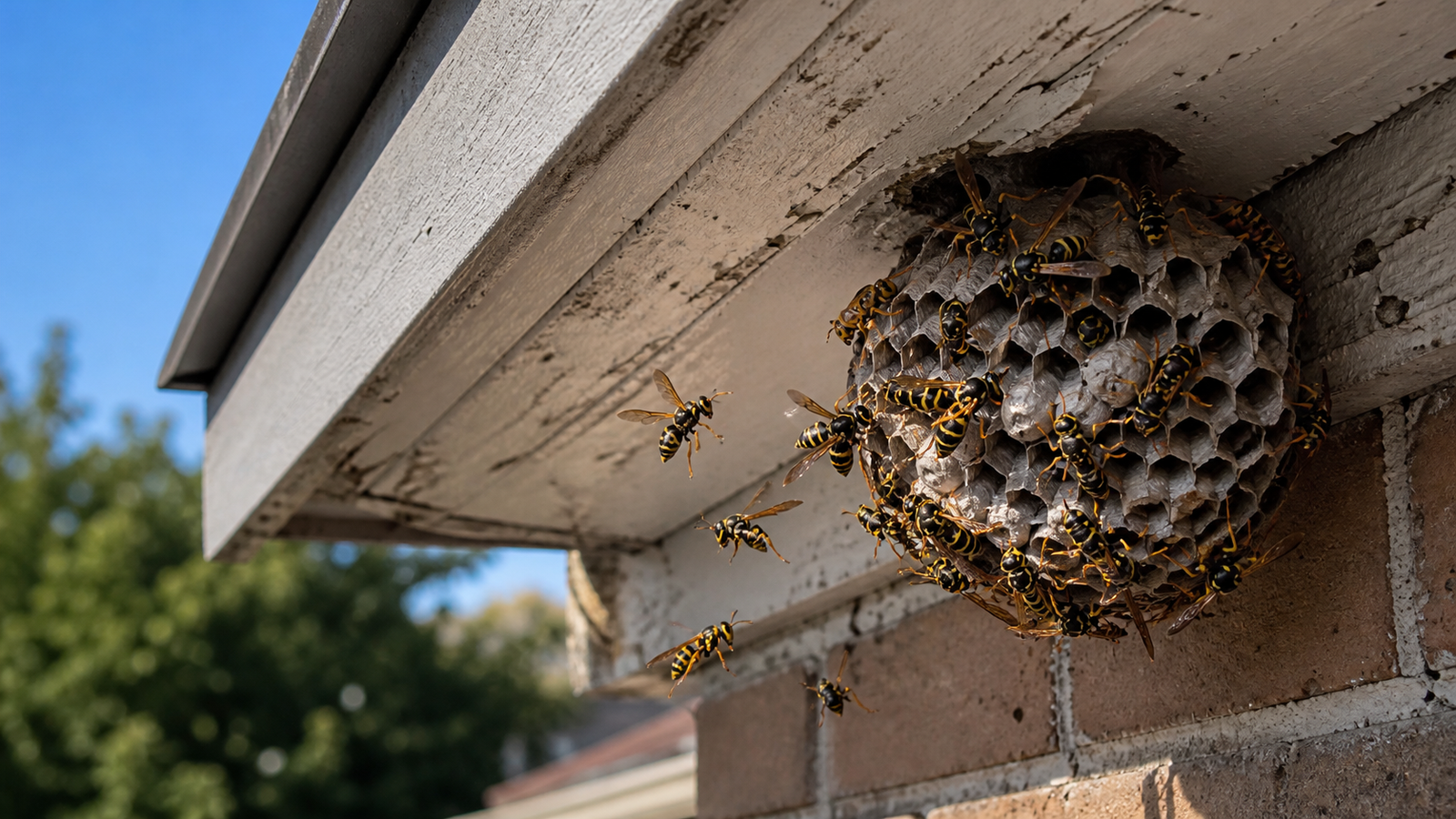
Home/Wasp Nest Removal Melbourne
European & paper wasps · Melbourne-wide · 24/7Wasp Nest Removal Melbourne|Call 0435 073 966 For Emergency
Wasp nest by the door? We remove wasp nests across Melbourne the same day, with a six month warranty on the nest site. Call 0435 073 966 for a free quote.
Wasp nest on the property? Start here
Tell us your postcode and where the nest is. A technician calls you back with a clear written quote.
Request your quote
Takes under a minute – postcode and what you have seen is enough.
Your details go to our Melbourne office only.
Never block the entrance to a wasp nest in a wall
It is the most intuitive idea and the most damaging one. You find wasps going in and out of a weep hole or a gap in the cladding, so you fill it. The colony is still alive inside, and it chews its way out in the other direction – through the plasterboard, into the bedroom.
The second DIY mistake is the can of spray at dusk. European wasps release an alarm pheromone when the nest is attacked, and they sting repeatedly rather than once – unlike a bee, a wasp does not lose its sting. That is how a person ends up with thirty stings from a nest they thought they had handled.
The third is the lawnmower. In-ground European wasp nests in lawns are common in Melbourne from January to April, they are invisible until you are on top of them, and a mower over the entrance is the classic multiple-sting incident in this state.
If the nest is in a wall, a roof void or the ground, leave the entrance exactly as it is, keep people and pets away from that side of the house, and call. Treated properly, the colony is dead within a day.
Four Wasps, And Two Of Them Need Nothing
Two social species that sting repeatedly, and two solitary ones we will tell you to leave alone.
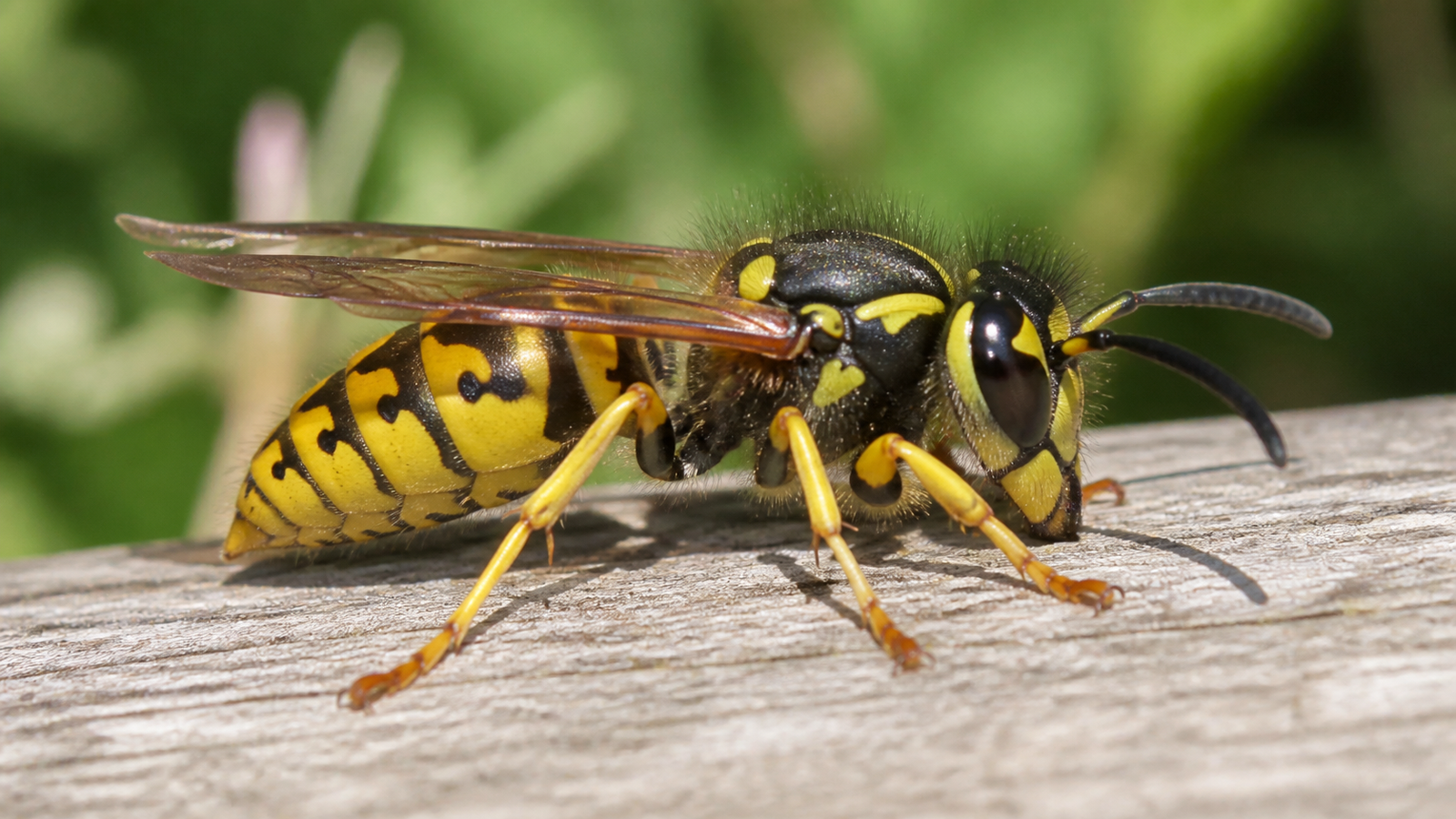
European wasp
Vespula germanica – 12-17mm
Bright yellow and black, thicker-bodied than a bee, with a hairless shiny look. Nests hidden in wall cavities, roof voids, compost heaps and holes in the lawn, and the colony can reach thousands.
What we do about it: The one that matters. Treat now – these sting repeatedly, scavenge around food and drinks, and defend the nest aggressively. Six-month warranty on the treated site.
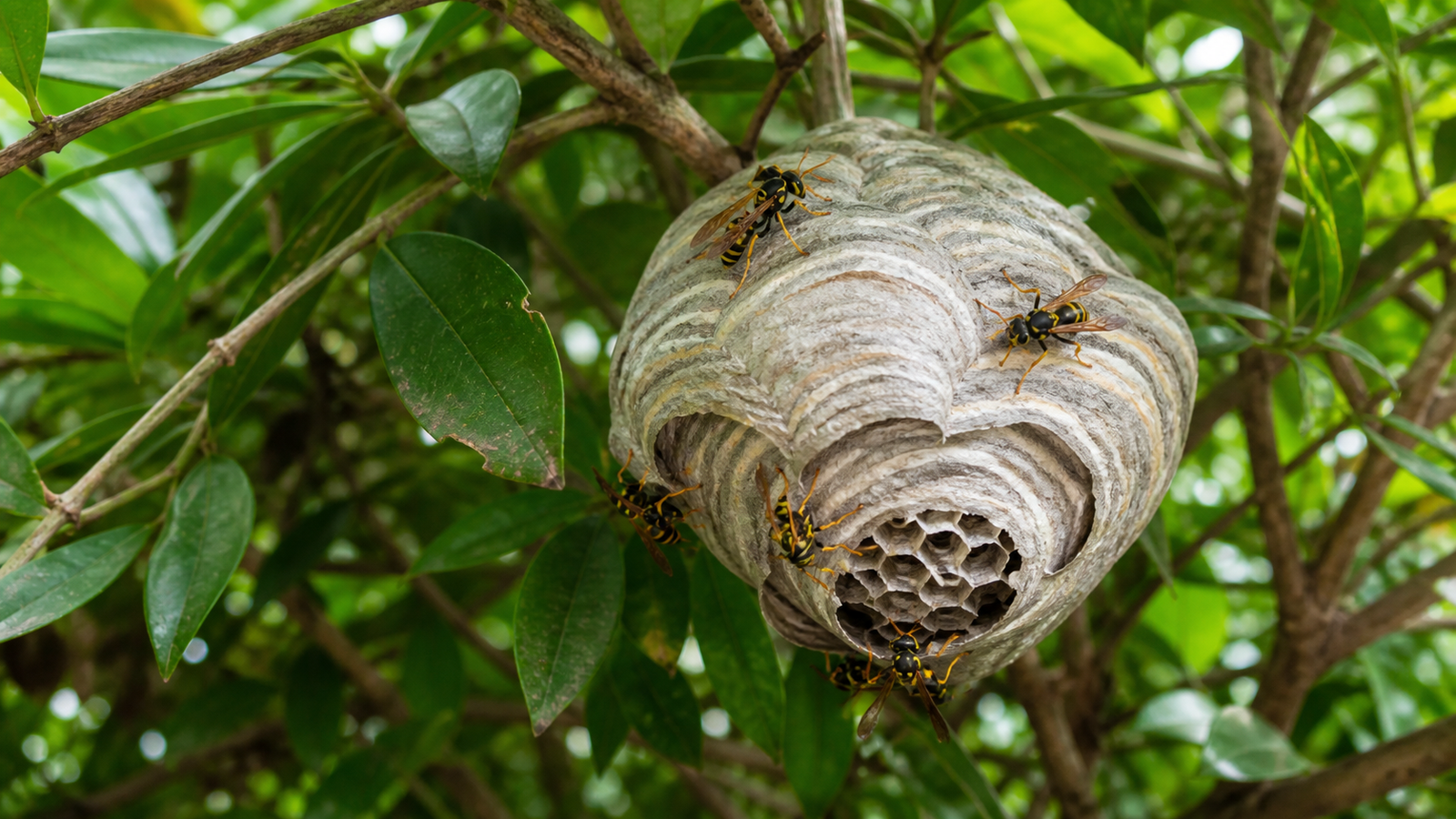
Paper wasp
Polistes species
Slimmer, longer-legged, and the nest is the giveaway – a small open grey umbrella of hexagonal cells hanging under an eave, pergola or railing, usually with fewer than 30 wasps.
What we do about it: Treat if it is near a doorway, washing line or play area. Otherwise they are far less aggressive than European wasps and a nest tucked out of the way can honestly be left alone.
Scavenging around food
Why they ruin outdoor meals
European wasps are the ones on your drink can and the meat at a barbecue. Late summer is worst, when the colony peaks and switches to hunting sugar and protein.
What we do about it: Wasps at the table mean a nest within a few hundred metres – often a neighbour’s. We can find and treat it, and that is what stops the problem rather than swatting.
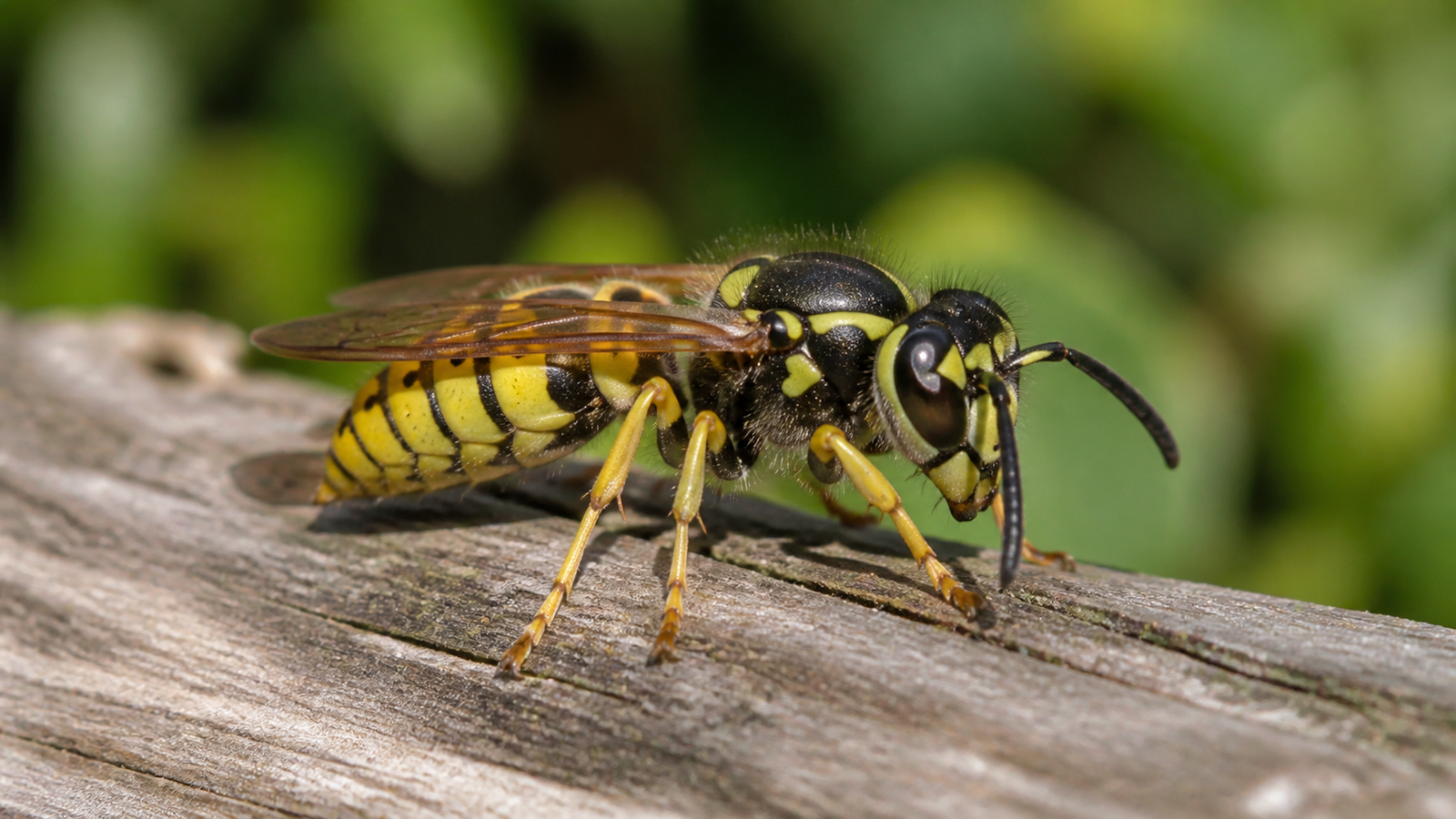
English wasp
Vespula vulgaris
Nearly identical to the European wasp at a glance and behaves the same way – social, aggressive near the nest, and a repeat stinger. Slightly different facial markings, which is the only reliable tell.
What we do about it: Treated exactly like a European wasp. For your purposes the distinction does not change anything: if it is a Vespula nest near people, it goes.
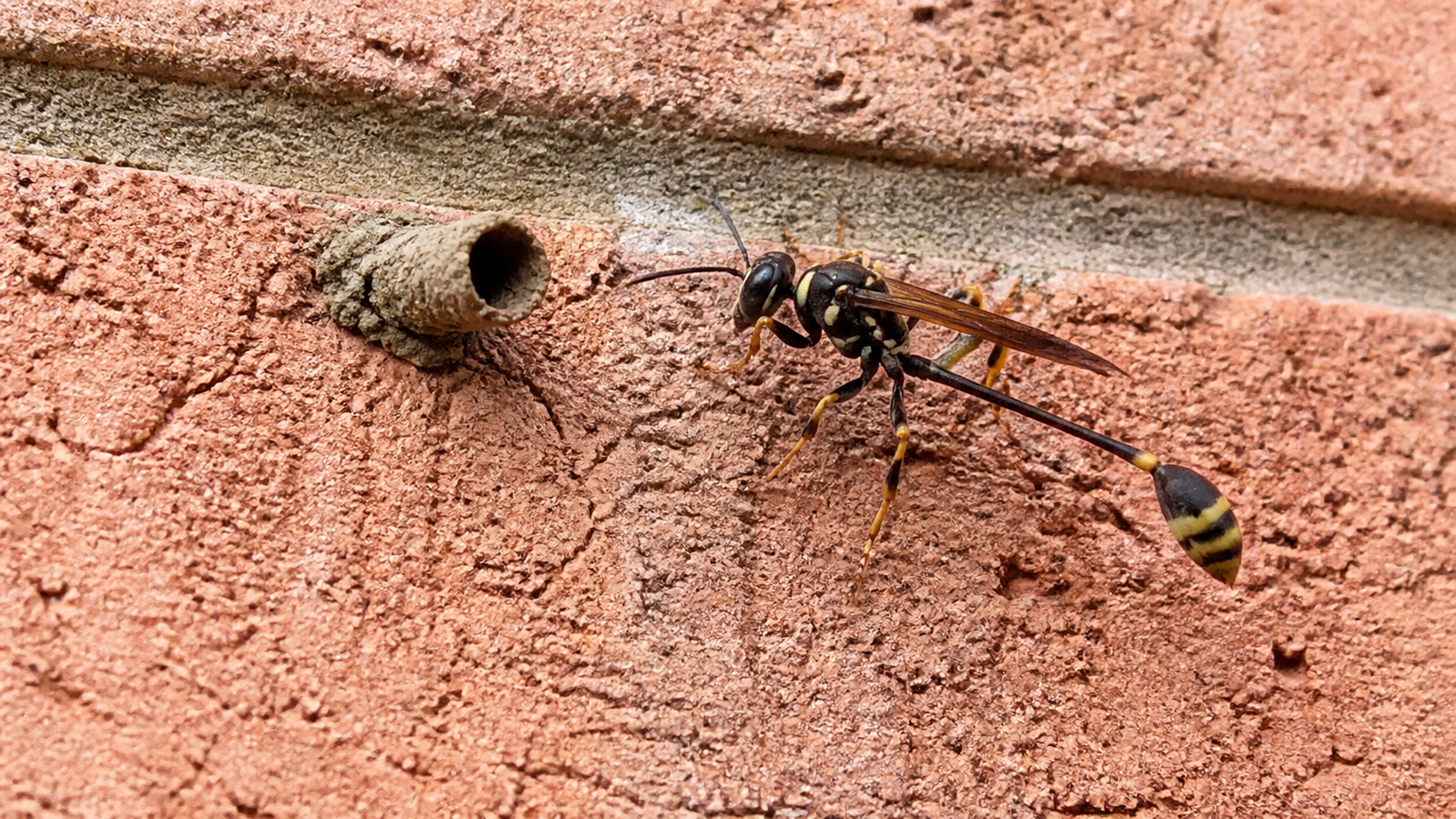
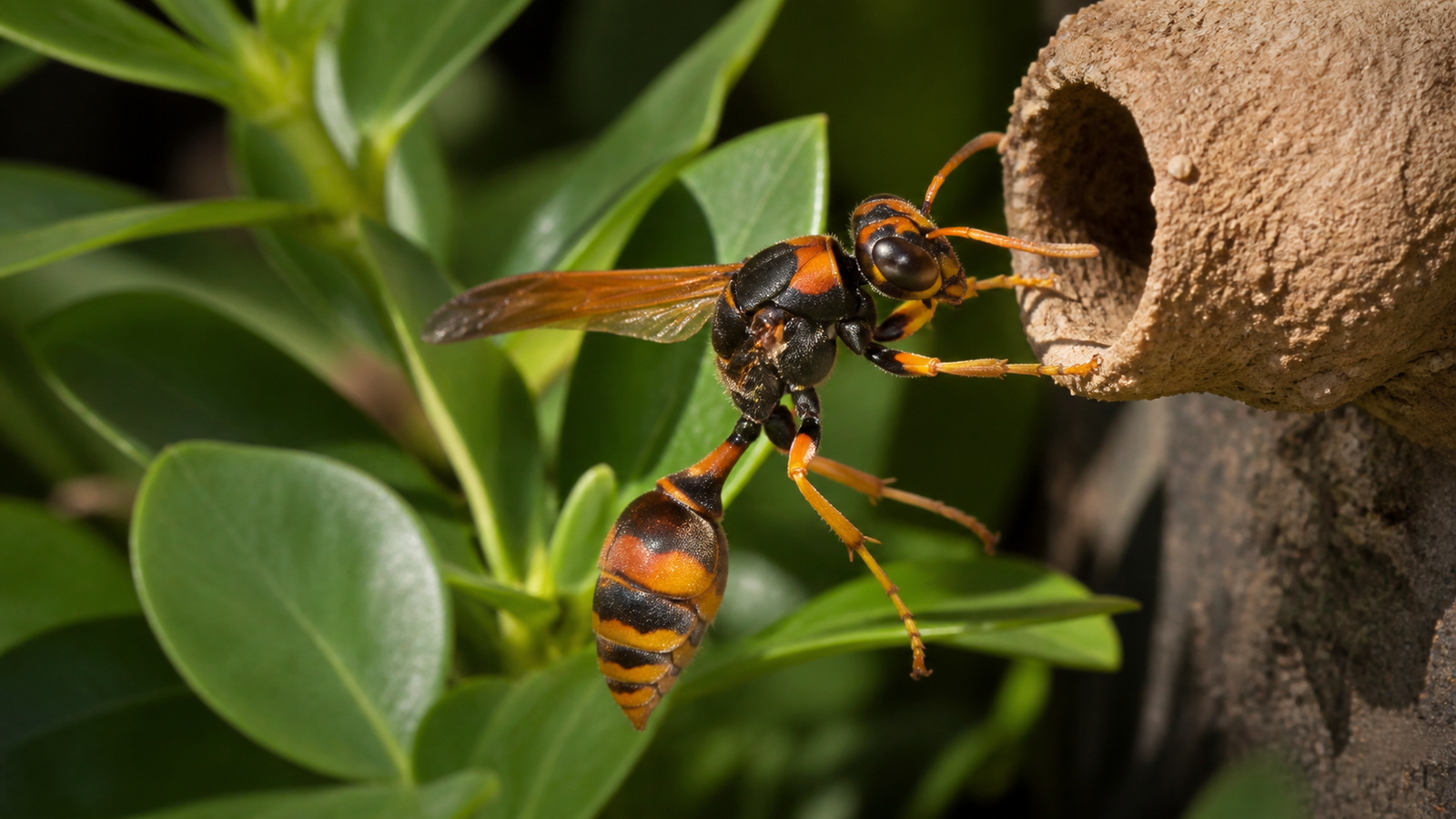
Mud dauber wasp
Sceliphron laetum
A slim, long-waisted wasp that builds hard mud cells on walls, under eaves and inside sheds. Solitary – there is no colony and no nest to defend.
What we do about it: Needs nothing. Mud daubers do not swarm and effectively never sting people; they hunt spiders. We will tell you to scrape the mud off and leave it at that.
Finding The Nest Before Anyone Gets Stung
Six things that tell us where the colony actually is.
A steady two-way stream at one small hole
The clearest sign of a nest inside a cavity. Traffic in and out of a single point means the colony is behind that wall, not passing through.
Wasps disappearing into a hole in the lawn
An in-ground European wasp nest. Mark the area from a distance, keep the mower off it, and keep children and pets away until it is treated.
A grey papery umbrella under an eave
Paper wasp nest. Open cells visible from below, generally a small colony, and only a problem if it is above a doorway or washing line.
Wasps at the barbecue in February and March
Peak European wasp season in Melbourne. Scavenging behaviour means a mature nest nearby, usually within a few hundred metres.
A rasping sound inside a wall on a warm day
Nest-building – the colony chewing wood fibre into paper. It means the nest is inside the cavity and growing.
A hard mud tube on a wall or window frame
A mud dauber. Solitary, non-aggressive, and genuinely needs nothing done – we will tell you that rather than treat it.
Four Steps, One Clear Quote
Find it, treat it properly, and make sure it does not come back to the same spot.
Locate the nest
Watching the flight line is how a cavity nest is found. Treating what you can see without finding the actual nest is why some jobs fail and need repeating.
Clear written quote
Findings and price before we start, including the honest answer when what you have is a mud dauber or a tucked-away paper nest that needs nothing.
Treat the colony
Product applied directly into the nest entrance in protective equipment. The colony is generally dead within a few hours, and returning foragers die on arrival.
Remove and prevent
Accessible nests are physically removed so the site does not attract a new colony, and we advise on the cavity gaps to seal once the nest is dead – never before.
Wasp Nest Removal Cost Melbourne
Published, quoted in writing, and quoted on where the nest actually is.
Accessible nest
A nest you can point at – eave, pergola, tree or shed. Treated and removed.
Cavity or in-ground nest
Wall cavity, roof void or a nest in the lawn, where the colony must be located first.
Difficult access or height
Second storey, roofline or a nest needing height equipment.
Commercial premises
Schools, cafes, warehouses and body corporates, scheduled around your hours.
What the price covers: locating the nest, treating the colony in full protective equipment, removing accessible nests, and a six-month warranty on the treated site.
Comparing quotes? Melbourne wasp jobs run about $120-300 per nest generally, and $200-400 for European wasps specifically. What separates a good quote from a cheap one is whether they will locate a cavity nest rather than spraying the entrance. Send us any written quote and we will beat it by 5%.
Six months on every nest site we treat
A new colony at the same treated location inside six months is our problem, not yours – we come back at no charge.
Three Things Most Wasp Companies Will Not Tell You
Blocking the hole sends them inside
A sealed entrance does not trap the colony, it redirects it. They chew inward through plasterboard and end up in the room. Seal only after the nest is dead, never before.
Not every wasp needs treating
Mud daubers and potter wasps are solitary and non-aggressive, and a paper nest away from doorways is doing more good than harm. We would rather tell you that than write an invoice.
If it is bees, we do not spray
Honey bees get referred to a beekeeper for live relocation. A pest sprayer can kill a colony in minutes; a beekeeper can save it, and there is no good reason to choose the first.
Often Booked With Wasp Nest Removal
Same crew, same visit where it makes sense.
Wasp Nest Removal Across Every Melbourne Suburb
One number covers the whole metro area, with no travel surcharge.
Wasp Nest Removal Melbourne FAQs
The questions we are asked most, answered straight.
How much does wasp nest removal cost in Melbourne?
Ours starts from $159 for an accessible nest you can point at, $249 where the nest is in a wall cavity, roof void or the ground and has to be located first, and $399 for height access or commercial premises. Melbourne rates run about $120-300 per nest, and $200-400 for European wasps specifically.
Can I just block the hole where they are going in?
No – this is the mistake that causes real damage. The colony is still alive inside and will chew its way out in another direction, which frequently means through the plasterboard into a bedroom. Leave the entrance exactly as it is and let us treat the colony first. Sealing comes after the nest is dead.
Why should I not spray the nest myself?
European wasps release an alarm pheromone when the nest is attacked and they sting repeatedly – a wasp does not lose its sting like a bee does. Most multiple-sting incidents we hear about start with a can of supermarket spray at dusk. If anyone in the house has an allergy, it is not worth the risk at all.
When are European wasps worst in Melbourne?
January to April. Queens emerge in spring, the colony builds through summer, and numbers peak in late summer and early autumn – which is when they start scavenging around food and drinks. Nests are also at their largest then, so this is the busiest period.
How do I know if it is wasps or bees?
Bees are fatter and fuzzy, and they carry pollen on their legs. Wasps are slimmer and shiny with a pinched waist. It matters a great deal: we treat wasps, but honey bees are always referred to a beekeeper for live relocation rather than sprayed.
How long does it take for the wasps to die?
The colony is generally dead within a few hours of treatment, and foragers that were out at the time die as they return. You may see activity at the entrance for a day or so, which is normal and is those returning wasps.
What about a wasp nest in the lawn?
In-ground European wasp nests are common in Melbourne over summer and are the classic lawnmower incident, because the entrance is invisible until you are on top of it. Mark the spot from a safe distance, keep the mower away and keep children and pets off that part of the yard until it is treated.
Do you remove the nest as well as treat it?
Accessible nests are physically removed once the colony is dead, which stops the site attracting a new colony. Nests inside a wall cavity or roof void are usually left in place – removing them means opening the structure, and a dead nest is not a hazard.
Do you treat mud dauber or potter wasp nests?
Generally we advise leaving them. They are solitary, non-aggressive and pose no real risk – the hard mud tubes on a wall are their nests. We will tell you that on the phone rather than send someone out to charge you for it.
Do you service my suburb?
Yes – all of metro Melbourne, from the CBD out through the northern, eastern, southern, bayside and western suburbs, with no travel surcharge.
Get that nest dealt with today
Send your postcode and where the nest is. We will call back with a clear written quote and, where a slot is open, be there today.
Get my free quote
No obligation. Answered 24/7.
Your details go to our Melbourne office only.
Get your free quote
Quoted in writing before we start. Answered 24/7.