
Rodents & Wildlife
Termites & Timber
Stinging Pests
Crawling Insects
Property Programs
Not sure what you have?Describe what you have seen and we will identify it – no charge, no obligation.
All Services
Rodents & Wildlife
Termites & Timber
Stinging Pests
Crawling Insects
Property Programs
Company
Our WorkPricingProcessAboutContactCall 0435 073 966
Home/Commercial Pest Control Melbourne
Food premises, offices & warehouses · Melbourne-wide · 24/7Commercial Pest Control Melbourne|Same Day Service
Need an audit-ready pest program? We cover Melbourne cafes, kitchens and warehouses with full documentation. Call 0435 073 966 for a free quote.
Need a documented program? Start here
Tell us your postcode, premises type and whether you have an audit coming. We will call back with a clear written quote.
Request your quote
Takes under a minute – postcode and what you have seen is enough.
Your details go to our Melbourne office only.
You are not audited on the spraying. You are audited on the paperwork
Every pest company in Melbourne advertises that it is HACCP compliant. Very few explain what that means in practice, so here it is: an auditor does not watch anyone treat your premises. They open a folder.
What they want to see is a pest management plan, a site floor plan showing every monitoring station, dated service reports for each visit, records of any activity found and the corrective action taken, and safety data sheets for the products used. A site can be completely pest-free and still fail on documentation.
That is the real difference between a $120 visit and a proper program. The cheap contract often includes the treatment and not the records – and you find out at the worst possible moment, with a council officer in your kitchen.
The other thing worth knowing: in food premises a visible fly or cockroach problem can trigger an immediate closure. That is why our commercial work starts with drains, grease traps, waste handling and proofing – fixing what attracts them – rather than a monthly spray around the skirting.
Kitchens, Warehouses And Everything Between
Different premises, different risks, different documentation.
Cafes, restaurants and kitchens
The highest-risk category
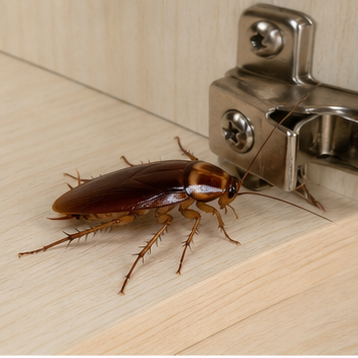
Warmth, food, water and constant deliveries. German cockroaches arrive in cardboard, rodents follow the waste, and drain flies breed in the floor wastes and grease trap.
What the program covers: Scheduled visits outside trading hours, monitoring stations mapped on a floor plan, drain and grease-trap treatment, plus the full record set for your food safety program.

Warehouses and food storage
Volume and pallets
Large footprints, roller doors that stay open, and pallets arriving from everywhere. Rodents are the main risk, and stock contamination is the expensive outcome.
What the program covers: Perimeter station network with a mapped plan, roller-door and dock proofing, plus trend reporting so you can see whether pressure is rising before it becomes a problem.

Offices, retail and body corporate
Lower risk, real reputation cost
Kitchenettes, bins, planter boxes and shared service risers. The pests are ordinary; the problem is that a customer or tenant seeing one costs you more than the treatment ever would.
What the program covers: Quarterly or scheduled general treatment, discreet attendance, and reporting suitable for building management and tenant communications.
When To Get A Program In Place
Six situations where a documented program stops being optional.
You are opening a food business
A pest management plan is part of your food safety program from day one. Getting it in place before opening is far easier than retrofitting it after an inspection.
An audit or council inspection is scheduled
The records take time to build. If your audit is next week and you have no service history, tell us – we will be honest about what can and cannot be produced legitimately.
Staff are reporting sightings
Staff see things before management does. A sighting log that feeds into scheduled service is the mechanism that stops small problems becoming closures.
Your landlord or franchisor requires it
Most commercial leases and franchise agreements specify pest management with documentation. We provide the reporting format they typically ask for.
You share a wall with a food business
Cockroaches and rodents move through shared cavities and service risers. Your neighbour’s problem becomes yours, and a monitoring network is how you find out early.
You had one bad visit and want it to not repeat
The most common reason people move to us. Reactive spraying does not build a record or find the cause – drains, waste handling and proofing do.
Four Steps, One Clear Quote
Assess, document, treat and report – in that order.
Site assessment
We walk the premises – kitchen, storage, waste area, drains, grease trap, dock and roof – and identify the actual pressure points rather than starting from a standard template.
Program and floor plan
A written pest management plan and a floor plan with every monitoring station numbered and located. This is the document an auditor opens first.
Scheduled service
Visits at a frequency matched to your risk and your obligations, outside trading hours, with treatment aimed at drains, waste and proofing as much as at the pests themselves.
Reporting you can hand over
A dated service report every visit covering activity found, action taken and recommendations, plus product safety data – the complete set for council and audit.
Commercial Pest Control Cost Melbourne
Published, quoted in writing, and priced on premises size and risk.
Initial treatment, small premises
First service for a cafe, small kitchen or retail site, including the site assessment.
Scheduled visit
Per visit on a program – service, monitoring, and the written report.
Monthly program, food premises
Higher-frequency schedule for kitchens and food manufacturing, per month.
Warehouse program
Larger footprint with a mapped station network and trend reporting, per visit.
What the price covers: the site assessment, a written pest management plan and floor plan, scheduled service outside trading hours, monitoring stations, and a dated report every visit with safety data sheets.
Comparing quotes? Melbourne food premises programs run $150-400 a month, initial treatments $200-450, and scheduled contract visits $120-280 each. Before comparing, check whether the cheaper quote includes the floor plan, service reports and safety data – a site can be pest-free and still fail an audit on records. Send us any written quote and we will beat it by 5%.
Audit-ready documentation, every visit
The treatment is the part you see. The records are the part that gets inspected, so both are part of the price.
Three Things Most Commercial Companies Will Not Tell You
The audit is about paperwork
Nobody watches the spraying. They open the folder and look for a plan, a floor plan, dated reports and safety data. A pest-free site with no records still fails.
A cheap contract often has no records
That is usually how it is cheaper. You discover it with a council officer standing in your kitchen, which is the most expensive possible moment to find out.
Spraying is not the fix in a kitchen
Drains, grease traps, waste handling and proofing are what actually reduce pressure. A monthly spray around the skirting boards treats the symptom and bills you for it forever.
Often Booked With Commercial Pest Control
Same crew, same visit where it makes sense.
Commercial Pest Control Across Every Melbourne Suburb
One number covers the whole metro area, with no travel surcharge.
Commercial Pest Control Melbourne FAQs
The questions we are asked most, answered straight.
How much does commercial pest control cost in Melbourne?
Our initial treatment for a small premises is from $349 including the site assessment, scheduled program visits from $220 each, monthly food-premises programs from $290, and warehouse programs from $390 per visit. Melbourne food programs generally run $150-400 a month with contract visits $120-280.
What does HACCP compliant actually mean for pest control?
It means the documentation exists and stands up. An auditor wants a pest management plan, a floor plan with numbered monitoring stations, dated service reports showing activity and corrective action, and product safety data sheets. Nobody watches the treatment – they read the folder.
Can a pest problem close my food business?
Yes. A visible fly, cockroach or rodent problem can trigger an immediate council closure, which is why our commercial work starts with drains, grease traps, waste handling and proofing rather than a routine spray.
How often do we need service visits?
It depends on risk and your obligations. Food manufacturing and busy kitchens are typically monthly; cafes and restaurants monthly to quarterly; offices, retail and warehouses often quarterly. We set the frequency to your risk rather than selling a standard package.
Do you attend outside trading hours?
Yes, and in unbranded vehicles where you ask. Most of our commercial work happens before opening or after close so there is no disruption and no customer sees a pest technician in your dining room.
What documentation do we receive?
A written pest management plan, a floor plan showing every monitoring station, a dated service report for each visit covering activity found and action taken, and safety data sheets for products used. That is the full set council and auditors ask for.
We are opening a new cafe. When should we book?
Before you open. A pest management plan forms part of your food safety program from day one, and getting the proofing and drain work right before fit-out is far cheaper than retrofitting after an inspection.
Our neighbour has cockroaches. Are we at risk?
Yes. German cockroaches and rodents move freely through shared wall cavities and service risers, so an adjoining premises with a problem creates pressure on yours. A monitoring network is how you detect it early rather than discovering it in your kitchen.
Do you handle strata and body corporate properties?
Yes – common areas, bin rooms, plant rooms and shared service risers, with reporting suitable for building management and tenant communication. Shared-space problems need a building-wide approach to actually resolve.
Do you service my suburb?
Yes – all of metro Melbourne, from the CBD out through the northern, eastern, southern, bayside and western suburbs, with no travel surcharge.
Get a documented program in place
Send your postcode, premises type and any audit date. We will call back with a clear written quote.
Get my free quote
No obligation. Answered 24/7.
Your details go to our Melbourne office only.
Get your free quote
Quoted in writing before we start. Answered 24/7.